
Most people think successful e-commerce brands grow because of great products or clever ads. While those things definitely help, they’re only part of the story.
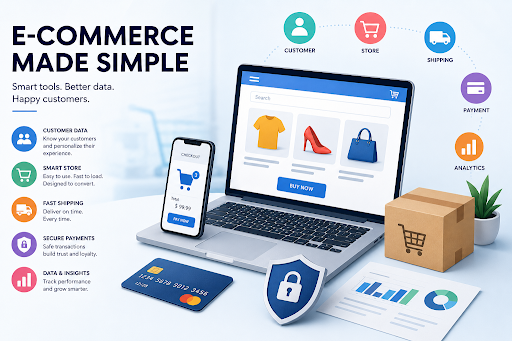
Behind every smooth online shopping experience is a long list of systems working quietly in the background. From accurate customer information to shipping automation and payment security, modern e-commerce depends heavily on organization and smart technology.
Customers rarely notice these systems when everything works properly. They simply expect their order to arrive on time, their payment to go through instantly, and customer support to respond quickly when needed. But for online businesses, making all of that happen consistently takes much more than just launching a website.
As competition grows in the digital marketplace, brands are learning that efficiency and customer experience matter just as much as the products they sell.
Why Small Mistakes Become Big Problems Online
In physical stores, employees can quickly fix small customer issues face-to-face. In e-commerce, even a tiny mistake can create a chain reaction.
A wrong shipping address can delay delivery for days. An inventory error can lead to overselling products that are actually out of stock. A slow checkout page can cause customers to abandon their carts seconds before buying.
These problems may sound small individually, but at scale, they become expensive.
That’s why more online businesses are investing in systems that help reduce errors before they happen. Address verification tools, automated order tracking, and testing platforms have become important parts of running an online store.
For example, developers sometimes use tools like US Address Generator while testing checkout systems, forms, or delivery workflows. It helps teams simulate customer scenarios and spot technical issues before real users experience them.
It’s the kind of behind-the-scenes work customers never see — but it can make a huge difference.
Customers Expect Convenience Now
Online shopping used to feel exciting simply because it saved time. Today, convenience is expected.
People want websites to load instantly. They expect delivery updates in real time. They want checkout processes that take less than a minute.
And if something feels frustrating, they’ll often leave without a second thought.
Modern shoppers have endless options, which means patience is shorter than ever. A competitor is always one click away.
Because of that, successful e-commerce brands focus heavily on removing friction from the customer experience.
That can mean:
- Simplifying website navigation
- Offering multiple payment methods
- Making returns easier
- Improving mobile shopping experiences
- Using automation to answer questions faster
The smoother the experience feels, the more likely customers are to come back.
Automation Is Helping Brands Grow Faster
One of the biggest changes in e-commerce over the last few years has been the rise of automation.
Businesses no longer need large teams to manually handle every task. Many processes now happen automatically behind the scenes.
When someone places an order, automated systems can:
- Confirm the purchase instantly
- Update inventory levels
- Send tracking emails
- Notify warehouses
- Detect suspicious transactions
- Recommend related products
Automation saves time, but more importantly, it helps businesses stay organized as they grow.
Without these systems, scaling an online store becomes extremely difficult. What works for 20 orders a day usually falls apart at 2,000 orders a day unless operations become smarter.
That’s why even smaller brands are investing in tools that improve efficiency early on.
The Shift Toward Personalized Shopping
People are becoming less interested in generic online shopping experiences.
They want brands to understand what they actually like.
This is why personalization has become such a major focus in e-commerce. Businesses now use browsing history, shopping behavior, and customer preferences to create more relevant experiences.
You’ve probably noticed this yourself while shopping online:
- Product recommendations based on previous purchases
- Emails featuring items you recently viewed
- Personalized discounts
- Custom homepage suggestions
When done well, personalization feels helpful rather than intrusive.
A big part of this strategy relies on strong data management. Businesses need organized customer information to make personalization accurate and useful.
Many companies are also investing heavily in educational and entertaining content because shoppers increasingly want more than just products. They want buying guides, tutorials, reviews, and inspiration before making decisions.
Brands that create useful experiences instead of only pushing sales tend to build stronger long-term relationships with customers.
Fast Shipping Became a Standard
A few years ago, fast shipping felt like a luxury feature. Now it feels normal.
Large retailers changed customer expectations permanently. People became used to getting orders quickly, and smaller businesses had to adapt.
Today, shipping speed can directly affect whether someone chooses one brand over another.
Because of that, logistics has become one of the most important parts of e-commerce strategy.
Businesses are investing in:
- Smarter inventory systems
- Regional warehouses
- Real-time delivery tracking
- Better demand forecasting
- Faster fulfillment software
Customers may never think about warehouse operations while placing an order, but those systems heavily shape their overall experience with a brand.
Reliable fulfillment builds trust. Delays and confusion damage it quickly.
Secure Payments Matter More Than Ever
Trust plays a huge role in online shopping.
People want to feel confident that their payment information is safe and their transactions are protected. Even small security concerns can stop customers from completing purchases.
That’s why payment systems have evolved rapidly over the past decade.
Modern e-commerce stores now offer:
- Digital wallets
- Mobile payments
- Buy-now-pay-later options
- Instant bank transfers
- One-click checkout systems
At the same time, advanced fraud protection tools are working constantly behind the scenes.
This is where modern financial services have become deeply connected with e-commerce growth. Payment providers are no longer just processing transactions — they’re helping businesses improve security, reduce fraud, and create smoother customer experiences.
As international shopping grows, these systems are becoming even more important for handling multiple currencies and cross-border transactions efficiently.
Data Is Quietly Driving Most Decisions
Many of the decisions e-commerce companies make today are based on analytics.
Businesses track:
- Which products people view most
- How long users stay on pages
- Where customers abandon carts
- Which ads generate sales
- What devices shoppers use
This information helps brands improve constantly.
Instead of guessing what customers want, businesses can look at real behavior patterns and adjust their strategies accordingly.
Data also helps companies reduce waste. They can forecast inventory more accurately, improve marketing performance, and identify problems earlier.
Of course, there’s a balance. Customers still expect privacy and responsible data handling, which is why transparency is becoming increasingly important.
The brands that use data intelligently without making customers uncomfortable are usually the ones that build stronger loyalty over time.
E-Commerce Is Becoming More Competitive
Launching an online store has never been easier. But standing out has never been harder.
Consumers now have access to thousands of brands across nearly every category imaginable. That means businesses can’t rely on products alone anymore.
Customer experience has become a major competitive advantage.
Sometimes the difference between a successful store and a struggling one comes down to small details:
- Faster support responses
- Easier returns
- Better product recommendations
- Cleaner website design
- More reliable delivery updates
Customers remember how a shopping experience felt, not just what they bought.
The brands that understand this are usually the ones that continue growing long term.
Final Thoughts
The future of e-commerce isn’t just about selling more products online. It’s about building smarter systems that create better experiences for customers.
From automation and logistics to personalization and payment security, modern online businesses depend heavily on strong digital infrastructure.
Most customers will never see the technology working behind the scenes — and honestly, that’s the point. When everything runs smoothly, shopping feels effortless.
The companies that continue improving those invisible systems are the ones most likely to thrive as e-commerce keeps evolving.