
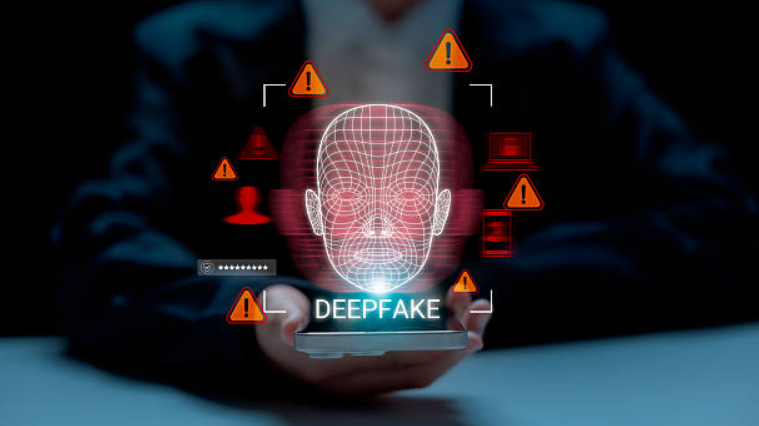
Synthetic media has moved far beyond novelty apps and entertainment filters. Convincing fake videos, cloned voices, and manipulated images are now being used in fraud schemes, political disinformation, and corporate scams across the United States. Deepfake detection exists to answer a question that has become increasingly difficult to resolve with the naked eye: Is this piece of media real, or was it generated or altered by AI? As synthetic content grows more convincing, deepfake detection has shifted from a research curiosity into a genuine security necessity.
What Is Deepfake Detection?
Deepfake detection refers to the technology and techniques used to identify video, audio, or images that have been artificially generated or manipulated using AI, generally to make it appear that a real person said or did something they never actually did. Early deepfakes were often identifiable through visible glitches, such as unnatural blinking or inconsistent lighting, but rapid advances in generative AI have made those obvious flaws far less common.
Why Detection Has Become Harder?
The same generative models that produce more convincing fake content also make detection more difficult, since detection systems are essentially trying to spot artifacts that newer generation techniques are specifically designed to avoid. This has turned deepfake detection into a continuously evolving discipline rather than a fixed, solved problem.
How Deepfake Detection Software Works?
Deepfake detection software generally relies on a combination of technical approaches, each targeting different signals that can reveal manipulation.
Artifact and Pixel Analysis
Some detection methods examine pixel-level inconsistencies, compression artifacts, or unnatural patterns left behind by the generation process, even when those flaws are invisible to a casual viewer.
Biological Signal Analysis
Other approaches analyze biological signals that are difficult for generative models to replicate accurately, such as subtle blood-flow-related color changes in skin or natural micro-movements around the eyes and mouth.
Metadata and Provenance Checks
Some detection tools also examine file metadata and digital provenance signals, helping establish whether an image or video’s history is consistent with an authentic recording rather than a generated or heavily edited file.
AI Deepfake Detection and the Ongoing Arms Race
AI deepfake detection has advanced considerably in recent years, trained on increasingly large datasets of both authentic and synthetic media. However, this progress exists within a genuine arms race dynamic: as detection models improve at identifying manipulated content, generative models tend to improve in response, often trained specifically to defeat known detection techniques. This dynamic means that a detection system trained on last year’s generation methods may already be less effective against the newest synthetic content.
Real-World Consequences of This Gap
This arms race is not theoretical. Deepfake audio has already been used in real fraud cases, including incidents where cloned voices were used to convince employees to authorize fraudulent wire transfers, sometimes for millions of dollars. These cases illustrate why deepfake detection technology cannot be treated as a one-time deployment, but instead requires ongoing updates to keep pace with newly emerging generation techniques.
Choosing a Deepfake Detection Solution
Selecting an effective deepfake detection solution requires evaluating more than accuracy claims alone. Detection performance can vary significantly depending on the type of media involved, whether the content is video, audio, or still images, and whether the manipulation technique used matches what a given tool was actually trained to detect.
Key Evaluation Criteria
Organizations evaluating a deepfake detection tool typically weigh a handful of factors: how frequently the underlying models are retrained against new generation techniques, whether the tool covers multiple media types rather than a single format, and how the tool performs against independent, third-party benchmark testing rather than vendor-reported figures alone.
Where Deepfake Detection Is Being Deployed Today?
Financial institutions have adopted deepfake detection as part of identity verification and high-value transaction approval processes, particularly following high-profile cases involving fraudulent video calls. Newsrooms and social media platforms have adopted detection tools to help flag potentially manipulated content before it spreads widely. Government agencies have also invested in detection research, given growing concerns about synthetic media being used in disinformation campaigns tied to elections and other sensitive public events.
A Technology Still Catching Up
Despite growing investment, deepfake detection technology has not fully caught up to the pace of generative AI improvement, and independent researchers have cautioned against overreliance on any single detection tool as a guaranteed safeguard. Most serious security programs treat detection as one layer within a broader verification strategy, rather than a standalone solution.
FAQs
Can deepfake detection tools catch every manipulated video or image?
No detection tool can guarantee perfect accuracy, since generative AI techniques continue to evolve and often specifically target known detection weaknesses. Most experts recommend treating detection as one layer of a broader verification strategy rather than a standalone guarantee.
How is deepfake audio detected differently from deepfake video?
Audio detection typically analyzes voice patterns, breathing irregularities, and subtle inconsistencies in tone or cadence, while video detection focuses on visual artifacts, biological signals, and frame-to-frame consistency, meaning tools are often specialized by media type.
Why do deepfake detection tools need frequent updates?
Generative AI models improve constantly, and newer generation techniques are often designed to avoid the specific flaws that older detection tools were trained to catch, which means detection models require ongoing retraining to remain effective against current threats.